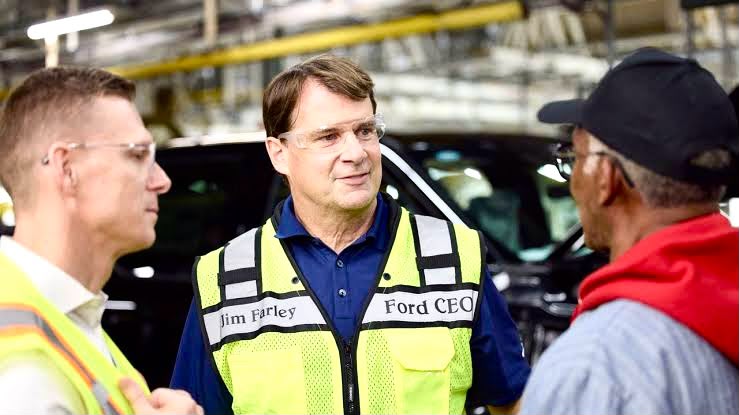
Ford’s CEO Won’t Mind His Own Business
A note to young leaders.
Most chief executives treat everything beyond the factory gate as weather. Homelessness, tariffs, the scarcity of electricians: these things happen to the company, and the job is to explain them to analysts with a suitably solemn face.
It’s called “minding your own business”. It’s prudent, it’s defensible, and it’s why so few business leaders are remembered.
Jim Farley, Ford’s CEO, has spent the past year refusing to mind his own business.
Ford cannot find enough electricians, welders and mechanics. For every 100 trade workers required, existing training programmes are producing about 55. Roughly half of those who begin training don’t finish.
That matters because a carmaker’s fate is bound up with the mechanic it doesn’t train, the supplier it doesn’t own and the trade school it doesn’t run.
In July, Ford joined BlackRock, Google and Carhartt to form an alliance for skilled trades. The group has commissioned detailed research into where the shortages actually are and created a national dashboard mapping them by occupation and geography.
Then, last week, Farley and Jamie Dimon launched Michigan LIFT. Ford aspires to make available up to $1 billion of new business to suppliers over the next decade; JPMorganChase up to $1 billion of financing. The idea is to connect emerging manufacturers with three things they often lack: customers, capital and the means to scale.
“Aspires”, to be sure, is no more than a promise to make an effort. But Farley’s instinct here is spot on.
We’ve overdosed on the notion of “minding our own business”. The chief executive tends to the company. Government tends to the country. Trade schools tend to training. Banks tend to capital. Everyone guards their own turf and then wonders why the grass between them is dying.
If a problem is hurting your business, ask yourself if there’s anyone better placed than you to fix it. Not whose job description it falls under, but who’s actually capable of fixing it.
If the answer is no one, the problem is yours.
So, stop minding your own business. Start minding the ecosystem your business relies on. The gate was never where you thought it was.