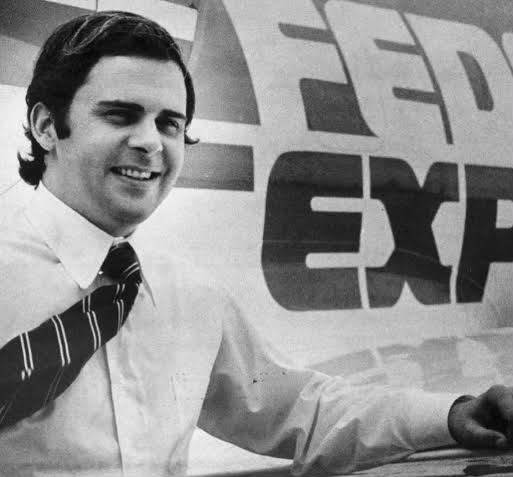
Fred Smith’s C-Grade Idea Became FedEx
A note to young leaders.
If you don’t like change, you’re going to hate extinction.
That was one of Fred Smith’s favourite sayings – and for good reason.
In 1965, as an economics student at Yale, Smith wrote a paper arguing that the existing air-freight system was broken. At the time, freight was largely a hitchhiker. If there was room in the belly of a passenger plane, it flew. If there wasn’t, it waited.
Routes and timetables were designed around passengers, not packages. This was adequate for cargo that could afford to loiter. It was useless for blood samples, X-rays and computer parts.
Smith saw the trend. Technology required time sensitive deliveries.
His solution was a dedicated overnight-delivery network: its own aircraft, its own timetable and a central sorting hub. Every package would be flown to one airport, sorted during the night and sent back out along the spokes to its destination.
It sounded absurd. Why fly a package hundreds of kilometres in the wrong direction before sending it to the right one? It was madness at the level of the individual parcel, but genius at the level of the network.
The Professor returned Smith’s paper with the comment: “In order to earn better than a C, the idea must be feasible.”
Six years later, Smith went ahead and built the system. The result was FedEx, which today is a USD 95 billion revenue company.
He had proven the professor wrong. And for years afterwards, FedEx advertisements displayed a sample package bearing a return address at Yale – a wink to the paper that got a C.
Your professor doesn’t have to believe you. Neither does your boss or your board. Spot the trend early, build it anyway, and let the profits grade the paper.