The Phone Call Rafael Nadal Couldn’t Make
A note to young leaders.
I’ve long admired Rafael Nadal, and not just for the determination with which he chased down tennis balls.
It was his manners off the court – the sense that his discipline extended past the baseline into some more private country.
But champions are vulnerable too, just like us.
In 2015, Nadal endured his annus horribilis. After a procession of injuries and illnesses, he failed to win a single Grand Slam for the first time since 2004. He didn’t even reach a semifinal.
More troublingly, he began to lose his love of the sport: “Tennis takes more from me, than it gives to me”, he told his wife at the time.
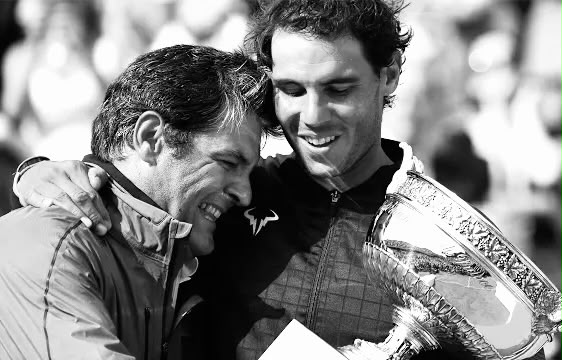
His uncle and long-time coach, Toni Nadal, knew only one answer to adversity – more adversity: “When you’re losing, you train harder. I’ve never known anyone who got better by resting.”
The result?
2016 was an even worse year than 2015: a total of only seven Grand Slam matches played.
Now Nadal started experiencing anxiety attacks, both on and off the court. His mouth became so dry that he struggled to swallow his own saliva. It reached the point where he wouldn’t leave the house or get into a car without a bottle of water, for fear that he might choke.
Something had to change. Toni’s spartan philosophy had built him into one of the world’s most resilient athletes – but more grit was no longer the cure, it was part of the disease.
Nadal was too close to Toni to say it. So he asked his father to tell Toni that Carlos Moyá would take over as head coach.
Moyá pushed Nadal towards a shorter, more aggressive game, and a stronger second serve – adjustments for an older body that could no longer win wars of attrition.
The effect was transformative.
In 2017, Nadal reached the Australian Open final, won his tenth French Open and a third US Open, and closed the year as World No. 1 – arguably the greatest late-career comeback in tennis history.
Everyone falls at some stage. There’s no shame or surprise in that.
Sometimes getting back up requires more grit. Sometimes it doesn’t. Pride can’t tell the difference.
Sometimes what’s needed is for a son to ask his father to make the one phone call he can’t bring himself to make.