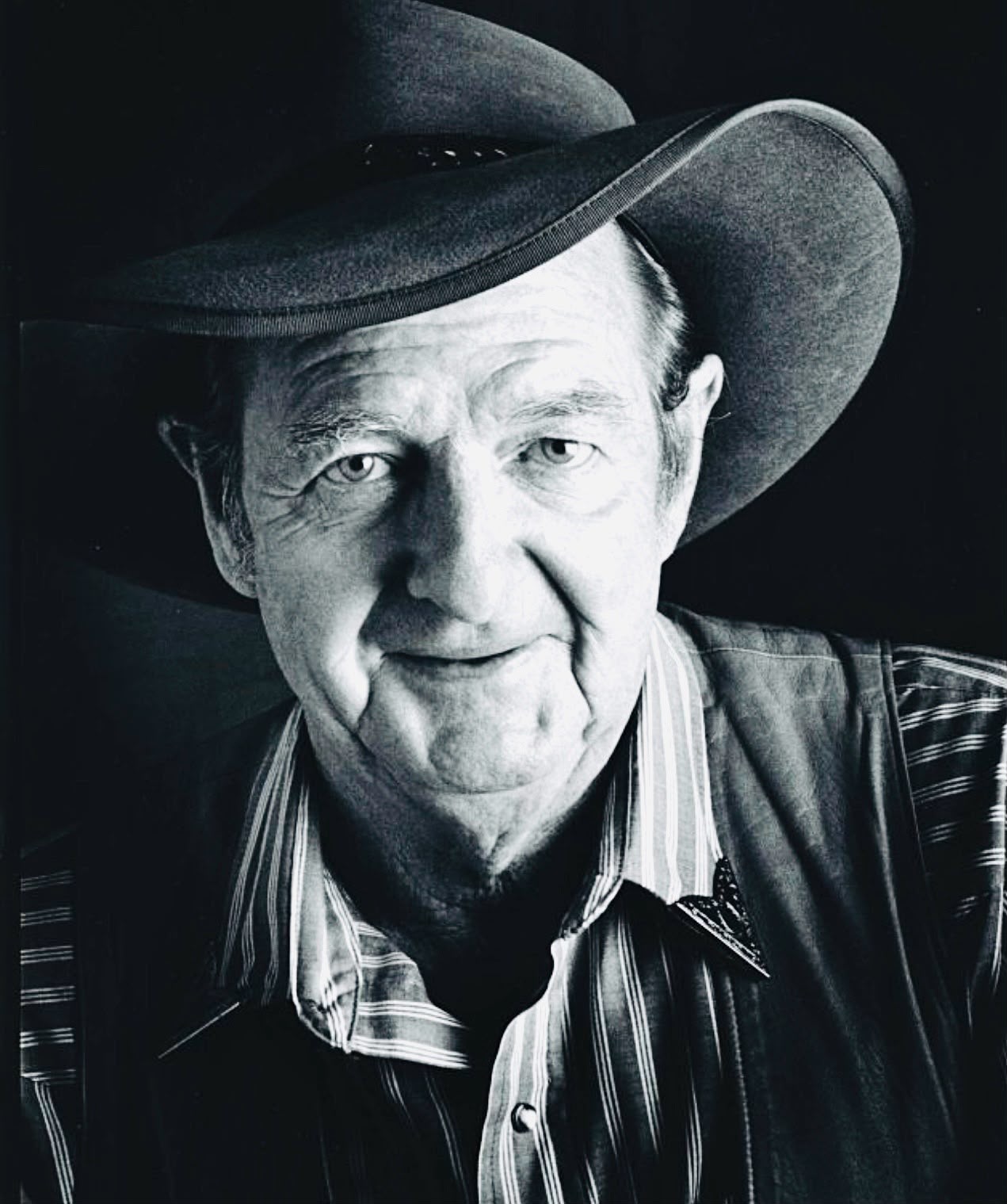
How Slim Dusty Found His Own Voice
A note to young leaders.
David Kirkpatrick was ten years old and living on a dairy farm at Nulla Nulla Creek in NSW when he began writing country songs – a young age to take up any profession, let alone one requiring heartbreak.
His first song was called “The Way the Cowboy Dies” – a subject on which he was not exactly an authority, having seen neither cowboy nor funeral. What he did have was a radio, and the radio played America. So he sang America back at it, drawl and all.
A few years later, an old man near the creek heard him singing, dug out the tattered remains of a book of Henry Lawson’s poetry and delivered one of the great lines of Australian literary criticism: “Forget that crap, young fella – this is what you ought to be singing about.”
The boy became Slim Dusty.
Every Australian country singer of that era faced the same temptation: America had the audience and the mythology already assembled. Slim declined the package. He kept the guitar but changed the geography.
He sang about drovers and dairy farms, truckies and railwaymen, Indigenous stockmen, floods, country pubs and the laconic music of Australian speech. He made art out of material the trendy regarded as parochial – a word they reserve for anything they find faintly embarrassing.
The parochial proved popular, and not just with the parish. “A Pub With No Beer” became the first Australian record to go gold. Then came “Lights On The Hill”, “Love To Have a Beer With Duncan” and “G’day G’day”.
Years after his death, his wife, Joy, found the battered Lawson book among Slim’s belongings. He had kept it all those years. Across the top, he had scrawled five words: “I call this the beginning.”
Your own material – your creek, your pub, your flood – is the only ground on which no one can out-compete you. Most people never find this out. They spend their careers singing about prairies they’ve never seen.
We all arrive at our careers the way Slim Dusty arrived at his: with a head full of other people’s records. Nothing wrong with that. It’s called an education.
Study the music. Lose the accent. Keep the creek.