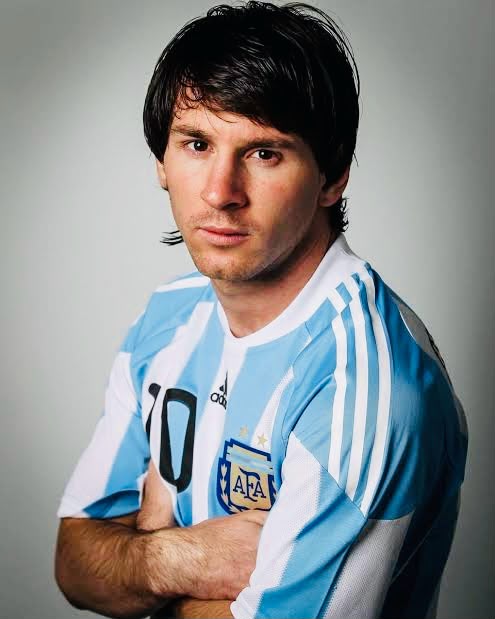
The Needles Behind Messi’s Origin Story
A note to young leaders.
As a child, Lionel Messi was off the charts.
But not in the way you might expect.
At ten, Messi was diagnosed with growth hormone deficiency. He stood at just four foot one (125 cms) – the smallest player on every field he played on.
Untreated, he was expected to reach no more than four foot seven (140 cms).
The treatment? A daily injection for years – costing USD 1,300 per month. Money his family didn’t have. His father worked at a steel plant; his mother in a magnet factory.
And if that wasn’t bad enough, Argentina’s economy collapsed in 2001 – and the family’s health insurance disappeared with it. His family pushed itself to the brink of bankruptcy to pay for the medication.
Messi, meanwhile, retreated so far into himself that his teammates initially thought he was mute.
You get the picture.
We do this thing with champions. We watch the finished article – the balance, the impossible turn, the eight Ballons d’Or – and we run the film backwards. We assume the boy was merely a miniature of the man.
We do this because inevitability demands less of us. It allows us to see destiny as a birthright – when, in truth, destiny is earned.
As a result, we admire talent and gloss over everything else: the struggle, the tenacity, the sacrifice.
We’ve got it the wrong way round.
Messi’s real origin story is not about prodigy. It’s about a painfully short, painfully shy boy giving himself injections every day.
We remember the goals. Messi remembers the needles.